 (626) 286-0360
 Airsoft
 Fishing
 Air Gun
 TCG
TCG Events

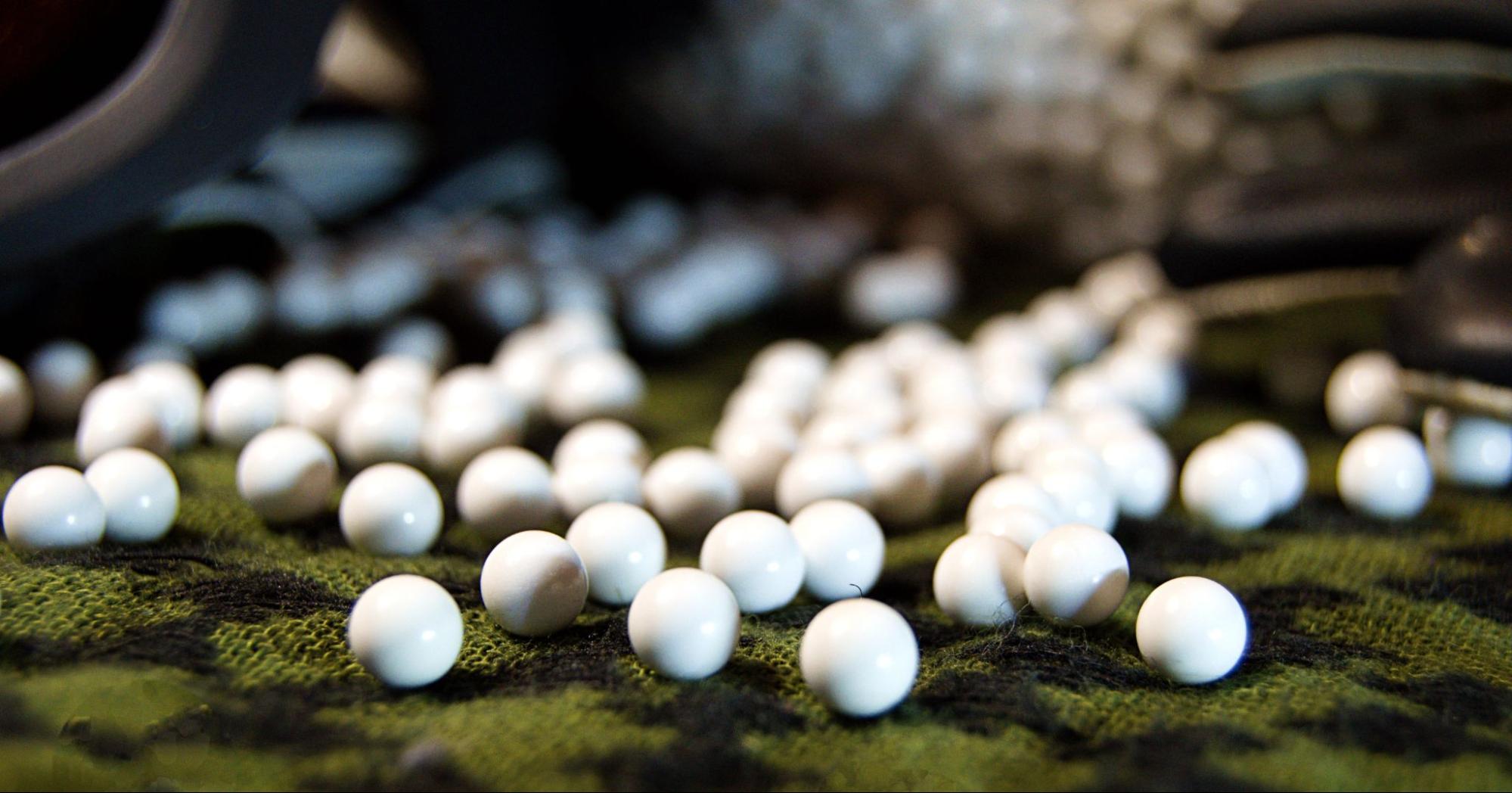
BB weight is one of those variables that quietly affects everything: your accuracy, your effective range, how much the wind pushes you around, and whether you'll even pass chrono at your local field. The "best" Airsoft BB weight isn't a one-size-fits-all answer. It depends on your gun's power output, how well your hop-up is set up, and where you're playing. Here's how to figure out the right choice for your setup.
Quick Answer
If you're in a hurry, here's a general starting point by platform and play style:
|
Play Style / Platform |
Recommended BB Weight |
|
Indoor / CQB |
0.20g-0.25g |
|
Outdoor AEGs |
0.25g-0.28g (solid all-around choice) |
|
Upgraded AEGs / DMRs |
0.28g-0.36g |
|
Sniper Rifles |
0.36g-0.49g |
Keep reading to understand why these ranges make sense and how to dial in the right weight for your specific gun and field.
Why BB Weight Matters (The Physics in Plain English)
Your Airsoft gun delivers a certain amount of energy when it fires. BB weight is what determines how that energy expresses itself downrange: as raw speed, flight stability, or resistance to wind and drag. Get it right and your shots land where you aimed them. Get it wrong and you're fighting your own gear.
Lighter BBs Fly Faster (At First)
A lighter BB leaves the barrel at higher FPS (Feet Per Second) because it takes less energy to accelerate it. That sounds like a good thing, and for CQB ranges it can be. But lighter BBs bleed off that speed faster, drift more in the wind, and are more susceptible to air turbulence. That initial velocity advantage doesn't last.
Heavier BBs Fly More Consistently
A heavier BB launches at lower initial FPS, but it holds onto its momentum better. It cuts through the air more predictably, resists wind drift, and typically produces tighter groupings at distance. What it gives up off the muzzle, it earns back on the way to the target.
The Counterintuitive Truth About Range
Here's something that surprises a lot of players: heavier BBs often outperform lighter ones at actual field distances, especially outdoors. Because they decelerate more gradually, they stay on course longer. The lighter BB that launched at 400 FPS may be tumbling and drifting by the time it reaches 150 feet. The heavier BB that left the barrel at 340 FPS may still be flying straight.
FPS vs. Joules (And Why Fields Chrono Differently)
Before you settle on a BB weight, you need to understand how your field measures power. Not all fields use the same method, and the difference matters for both safety and compliance.
What Joules Actually Measure
Joules measure the kinetic energy a BB carries on impact. It's a more complete picture of how hard something hits than FPS alone, because it accounts for both speed and mass together. A field that limits to 1.5 joules is regulating actual impact energy, regardless of what BB you're running.
Why FPS-Only Chrono Can Be Misleading
This is where a lot of players run into problems. If your field chronos by FPS using a standard 0.20g BB, you might pass with flying colors and then switch to heavier BBs on the field and actually be hitting harder than the limit allows. The FPS drops, but the joule output stays the same or increases. A setup that clears 400 FPS with 0.20g might exceed safe energy limits when running 0.28g.
Joule Creep (What It Is and Who It Affects Most)
Joule creep is a specific issue where certain power systems, especially gas blowback (GBB) and high-pressure air (HPA) setups, actually produce more joules with heavier BBs. The system has more time to push against the heavier projectile, resulting in higher energy output than you'd expect. It's not a concern for most stock AEG setups, but if you're running GBB or HPA, it's something you need to check before game day.
How to Avoid Problems at the Field
Before you show up to any field, confirm two things: whether they chrono by FPS or joules, and whether they chrono using your actual BB weight or a standard 0.20g. If they use your BB, you'll get an accurate reading. If they use 0.20g, make sure you've done the math on your actual joule output at your chosen weight.
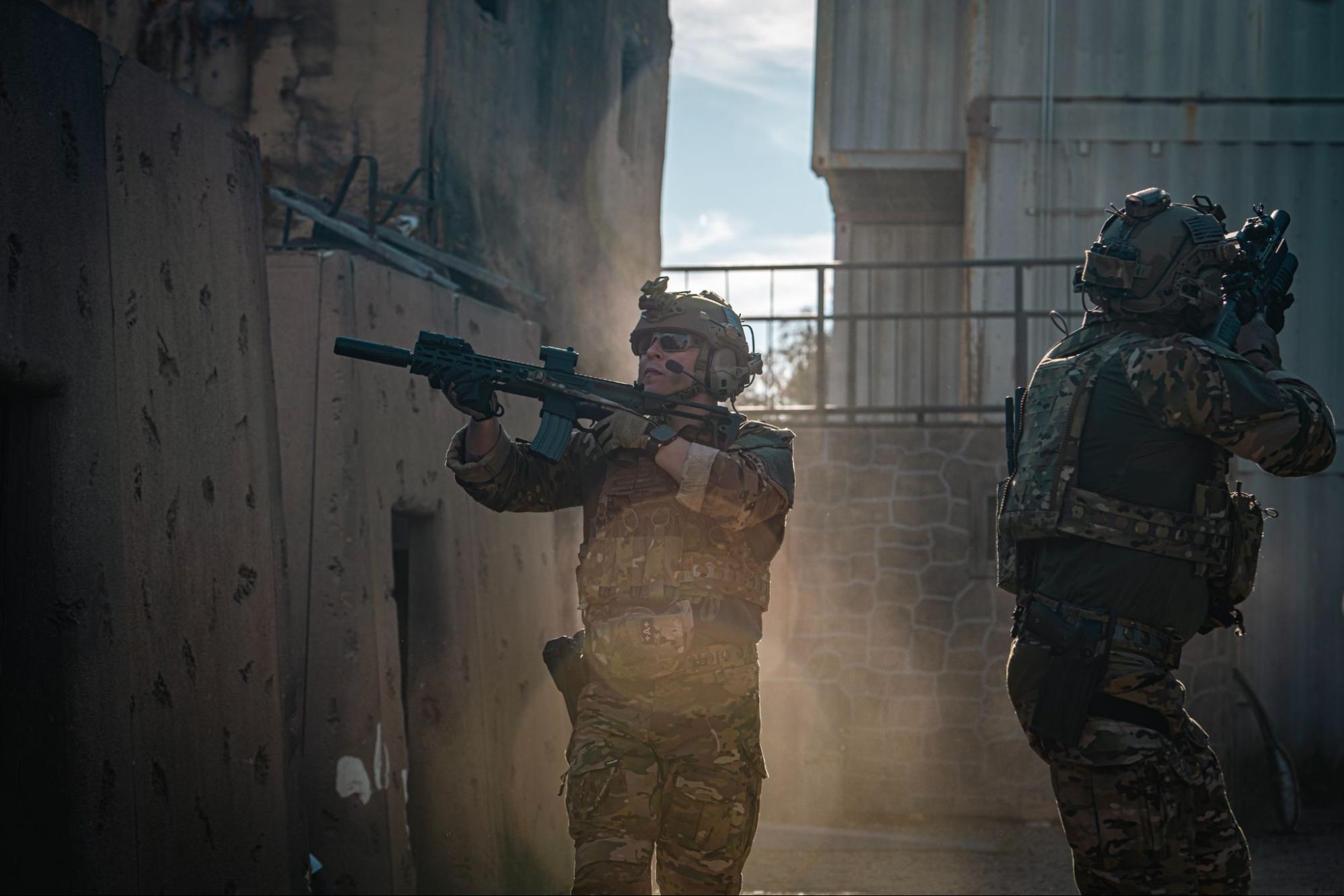
Best Airsoft BB Weight by Where You Play
Your environment is one of the biggest factors in choosing the right weight. Think about typical engagement distances and how much wind is going to be a factor.
Indoor / CQB
Inside, engagement distances are short, often 30 to 60 feet, and wind isn't a factor. Lighter BBs in the 0.20g to 0.25g range are practical here, and they keep your FPS in a range that's safe for close-quarters play. Some CQB fields also impose maximum BB weight limits to control energy on impact, so always check field rules before you load up.
Outdoor Field Play
Longer sight lines, variable terrain, and actual wind conditions make heavier weights worth the trade-off. In the 0.25g to 0.32g range and beyond, you'll see noticeably better consistency and grouping at distance. The drop in raw FPS is irrelevant compared to the real-world accuracy gains you pick up.
Wooded Fields and Variable Conditions
Trees, brush, and gusting wind make lighter BBs a liability. They get deflected by foliage and pushed sideways by any kind of air movement. Heavier BBs plow through those conditions better, giving you more confidence that your shot is going to track toward the target rather than veer off into the trees.
Best BB Weight by Gun Type and Power
Your platform determines how heavy a BB your system can realistically stabilize. This is about output energy and hop-up capability working together.
Stock AEGs
Most stock AEGs are tuned from the factory to perform well with mid-weight BBs. The 0.20g to 0.25g range typically delivers good FPS and solid accuracy right out of the box. Pushing heavier than 0.25g on a stock setup can sometimes result in under-hop and inconsistent flight, especially if the hop-up rubber isn't putting enough backspin on a heavier projectile.
Upgraded AEGs
An upgraded AEG with a tighter bore barrel, upgraded bucking, and better air seal has more to work with. Once your hop-up is dialed in, moving to 0.28g to 0.32g unlocks improved precision and downrange consistency. The upgrade investment pays off most when you're also running quality BBs at the right weight.
DMRs (Semi-Only Marksman Builds)
Airsoft DMRs are built to reach out. Heavier BBs in the 0.30g to 0.36g range are the standard choice for these platforms. You're trading close-range speed for consistent, flat trajectories at the distances where a DMR is supposed to dominate. Semi-auto fire also means each shot counts, so precision matters more than volume.
Sniper Rifles
Sniper platforms run the heaviest weights, typically 0.36g all the way up to 0.49g for high-powered setups. The goal is maximum momentum retention and wind resistance at extreme range. A well-tuned Airsoft sniper rifle with the right heavy BB can deliver surprisingly tight groupings at distances where an AEG shot would have drifted completely off course.
GBB and HPA Systems
Gas and HPA platforms are fantastic, but they come with the joule creep consideration already covered above. Before settling on a BB weight for a GBB pistol, rifle, or an HPA rig, re-chrono with that weight and confirm your actual joule output. What reads safe on 0.20g might read hot on 0.28g. Build in that margin before you hit the field.
How to Match BB Weight to Your Hop-Up
Your hop-up is the bridge between your Airsoft gun's power and your BB's flight path. Getting that pairing right is what actually makes a BB fly well, not just leaving the barrel fast.
What Hop-Up Does
Hop-up applies backspin to the BB as it exits the barrel. That backspin creates lift that counteracts gravity, keeping the BB's trajectory flatter for longer. Without it, every BB would arc downward immediately after leaving the barrel. A properly tuned hop-up is the difference between a 100-foot gun and a 200-foot gun, even with the same power output.
Signs Your BB Is Too Light
If you crank your hop-up up and the BB still floats upward, flutters, or curves unpredictably, your BB is probably too light for the amount of backspin the hop-up is applying. Outdoors, a light BB will also get pushed sideways by any wind. The hop-up can't compensate for a lack of mass.
Signs Your BB Is Too Heavy (For Your Setup)
Flip side: if your BB drops early even with the hop-up turned up to max, the system doesn't have enough energy or hop-up tension to keep it airborne. The BB is too heavy for your power output and bucking setup. You'll see a steep nose-down arc that no amount of adjustment will fix without hardware changes.
Why Constant Weight Switching Is Annoying
Every time you change BB weight, you're essentially re-tuning your gun. The hop-up setting that's perfect for 0.25g is not going to be right for 0.28g. Most experienced players pick one weight that works well for their main playstyle, stick with it, fine-tune the hop-up once, and leave it alone. Bouncing between weights without re-tuning leads to frustrating, inconsistent results on the field.
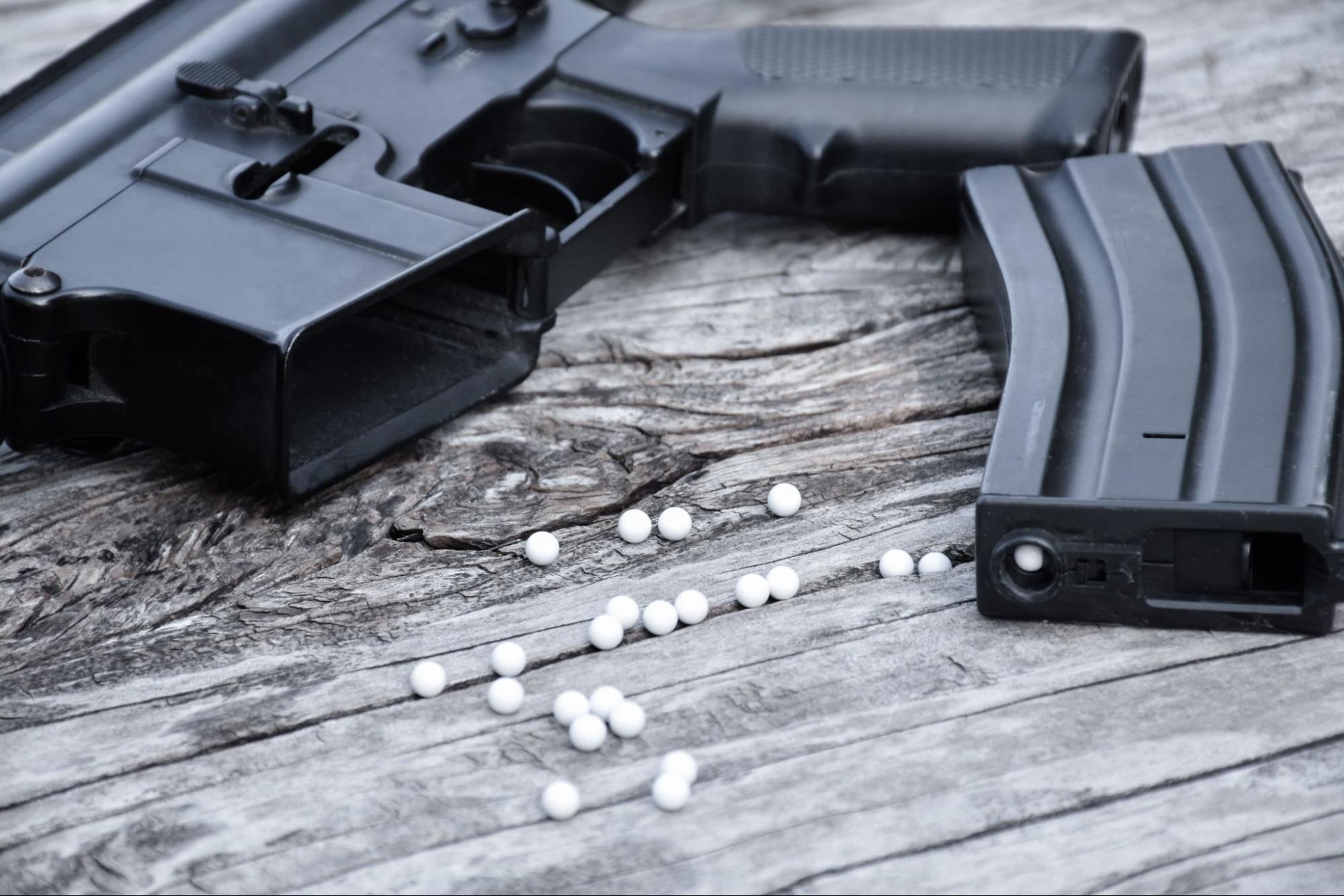
A Simple "Pick Your BB Weight" Framework
Stop guessing. Run through these four steps and you'll land on the right weight for your setup.
Step 1: Identify Your Field Type
Indoor CQB or outdoor? This single decision narrows your range significantly. CQB players lean lighter (0.20g to 0.25g). Outdoor players lean heavier (0.25g and up). If you play both regularly, pick the environment where you play most and optimize for that.
Step 2: Confirm Your Field's Chrono Rules
Call or check the field's website before you go. Do they chrono by FPS or joules? Do they use a standard 0.20g BB or your actual BB? Knowing this tells you what's actually allowed and helps you avoid showing up with a hot setup you can't use.
Step 3: Choose the Heaviest BB Your Hop-Up Can Reliably Lift
Within your field's limits, run the heaviest BB your hop-up can apply a stable, consistent backspin to. More mass means more stability in real-world conditions, as long as your system can actually hop it. If you're unsure, test a few weights at the range before game day.
Step 4: Test and Lock It In
Pick a weight, tune your hop-up for it, shoot a meaningful number of shots, and evaluate the results. Once you find the sweet spot, commit to it. Standardizing on one BB weight lets you actually learn how your gun shoots, and that consistency pays off every game.
BB Quality Matters as Much as Weight
You can pick the perfect weight and still have terrible results if your BBs are garbage. Don't cheap out here. Bad BBs are the most common cause of unexplained accuracy problems.
What to Look For in High-Quality BBs
Look for a seamless finish with no visible seam lines running around the equator of the BB. High-quality Airsoft BBs are polished consistently, have tight manufacturing tolerances (typically within 0.01mm or better), and are uniform in weight from BB to BB. That consistency is what keeps your groupings tight.
Why Cheap/Seamed BBs Cause Issues
A seam on a BB creates aerodynamic inconsistency. The BB spins unevenly in flight and curves in unpredictable directions. Cheap BBs can also shatter in the barrel on high-powered builds, causing feeding issues and potential gearbox damage. You'll spend more replacing parts than you saved on bargain-bin BBs.
Bio vs. Non-Bio BBs
Biodegradable Airsoft BBs are required at many outdoor fields, especially those that don't allow field cleanup, including woodland sites and private land. Bio BBs are made from plant-based polymers that break down over time. Quality bio BBs from reputable brands perform just as well as non-bio options. The key is buying from a brand that takes manufacturing tolerances seriously. Don't grab the cheapest bio bag you can find and expect them to fly straight.
Shop Airsoft BBs at Evike.com
Evike.com carries one of the largest selections of Airsoft BBs available, covering every weight from 0.20g to 0.49g with bio and non-bio options across multiple trusted brands. Whether you're stocking up for a weekend game or looking to test a new weight class for your upgraded build, you'll find what you need. Shop Airsoft BBs at Evike.com and get the right ammo for your setup.
FAQs
Is 0.20g Always the Standard?
It's a common baseline for chrono purposes and indoor play, but "standard" doesn't mean "best." Many outdoor players find that 0.20g is noticeably worse for accuracy than heavier options. The 0.20g standard exists largely because it's the most widely available weight and fields use it as a consistent chrono reference, not because it produces the best downrange results.
Will Heavier BBs Damage My Gun?
In most cases, no. The key is proper hop-up tuning and staying within your field's energy limits. Running a BB that's too heavy for your hop-up to lift can strain the rubber over time, but that's a hop-up tuning issue, not a weight issue. Stick to what your system can reliably hop and you're fine.
Do Heavier BBs Always Shoot Farther?
They often perform better in real-world conditions, especially outdoors where wind is a factor. But "farther" isn't guaranteed. It depends on your power output, hop-up setup, and the quality of the BB itself. A heavier BB that your hop-up can't properly spin will actually underperform a lighter BB that's properly hopped. Setup and tuning matter as much as weight.
Can I Use One BB Weight for Everything?
Many players do exactly this. Standardizing on a mid-to-heavier weight, something in the 0.25g to 0.28g range for most AEG users, gives you solid performance across most field types without constant re-tuning. It's a practical compromise that lets you keep your hop-up dialed in and your results predictable, whether you're playing an indoor event or heading outdoors for a full-day game.